If you’ve ever stood in front of a bin of plastic or rubber parts, trying to pick the right component for a manufacturing line, assembly process, or even a small repair job, you’ve probably found yourself staring at two shapes that look almost identical at first glance: a solid cap and a hollow plug. As someone who’s run a Caps & Plugs supplier for over a decade, I hear this question almost every week from customers—from aerospace technicians building engine components to hobbyists putting together a backyard water feature. For a long time, I used to think the difference was just a matter of shape, but over the years, I’ve learned that these two parts are engineered for entirely different jobs, and picking the wrong one can derail a project faster than a bad batch of material. Let me break this down the way I explain it to my team, and the way I’ve walked customers through it in our warehouse meeting rooms, over coffee, and on site visits to factories. Caps & Plugs
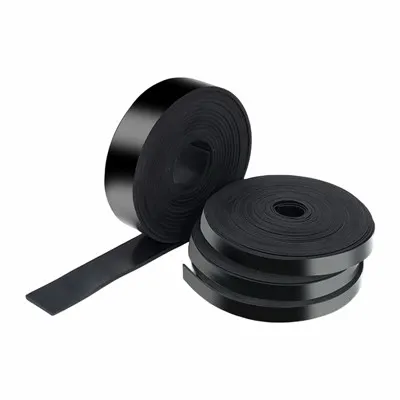
First, let’s start with what makes each part unique at their core, because that’s where all the differences stem from. A solid cap is exactly what it sounds like: a single, unbroken piece of material—usually rubber, plastic, or occasionally metal—with no empty space inside. It’s shaped like a small disk, cup, or sometimes a half-sphere, designed to rest over the end of an object and cover its opening entirely. Think of the rubber cap that comes on the end of a paintbrush handle, or the plastic cap that seals the end of a steel pipe when it’s being shipped to a construction site. The key here is that a solid cap forms a complete barrier: it doesn’t let anything in or out of the object it’s covering.
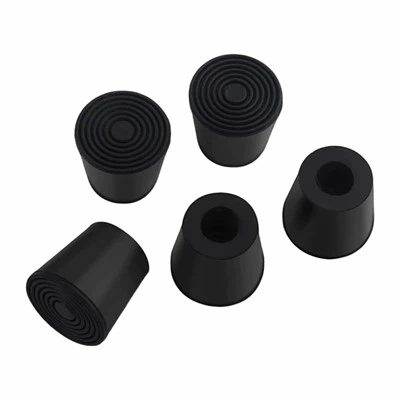
A hollow plug, on the other hand, is a tubular or cylindrical part with an open center. Its job isn’t just to cover an end—it’s to fit inside an opening, creating a seal between the plug and the walls of that hole. A hollow plug has an empty core, which is why it’s called “hollow” — that space isn’t a flaw, it’s the whole reason it works. If you’ve ever pushed a rubber stopper into a glass bottle to keep soda from going flat, or installed a plastic plug into the hole of a wooden bookshelf to cover a screw, that’s a hollow plug at work. The open center lets it grip the edges of the hole tightly, creating a pressure-tight or friction-based seal depending on the material.
Now, the practical uses of each part are where things get really clear, and where most people make their first (and most costly) mistake. Let’s go through common industries to make this real, because rules are meaningless if they don’t apply to the work you’re doing. For example, when I worked with a local automotive parts manufacturer last year, they were prepping engine cylinder heads for powder coating. The cylinder heads have small threaded holes on the surface that need to be sealed so powder doesn’t get inside them, and the team kept using solid caps for the job. They ran into two big problems right away: first, solid caps don’t conform to the threads of the small holes, so powder seeped in and ruined 12 cylinder heads in a week. Second, once the powder cured, they couldn’t get the solid caps off without scratching the soft aluminum surface. We switched them to our tapered hollow plugs, sized to fit exactly into those threaded holes. The hollow core let the plug expand just enough to grip the threads evenly, creating a complete barrier, and when the curing was done, it twisted out easily without leaving a mark. That’s the kind of difference that makes a supplier earn repeat business, not just a one-time order.
Another example is in the food and beverage industry, where we supply parts for bottling lines. A lot of customers here reach for hollow plugs when they need to cap a bottle, because they think “plug means seal,” but that’s the opposite of what a bottle needs. A beer bottle has a narrow neck that you cover from the outside with a solid cap, which fits over the rim and creates an airtight seal to keep the beer fresh. A hollow plug would sit inside the neck, leaving the rim exposed and letting air or bacteria get in. Conversely, when a beverage manufacturer needs to plug a hole in a stainless steel fermentation tank, a solid cap won’t work because you can’t stick it inside the tank’s opening — it would just sit on the surface and leak when pressure builds up from fermenting beer. A hollow plug, sized to fit the tank’s threaded port, is pushed inside, creating a seal between the plug’s outer walls and the hole’s edges, so the tank stays pressurized and no liquid escapes.
Material is another big difference that most people overlook, even though it’s tied directly to whether a part is a cap or a plug. Solid caps are usually made from denser, more rigid materials, because they need to hold their shape when placed over an opening and resist compression. For high-temperature jobs—like sealing pipe ends during welding, where temperatures can reach 1,500 degrees Fahrenheit—we use solid graphite or high-temperature silicone caps that won’t melt or leave residue. Hollow plugs, by contrast, are often made from slightly more flexible or porous materials, because they need to expand and grip the inside of a hole. NBR rubber plugs are common for plumbing, because they compress just enough to fill gaps between a plastic pipe and a metal wall, while rigid nylon plugs work for electrical panels, where they need to snap into place and stay put long-term. That’s not a hard rule—we make solid rubber plugs for tight, low-temperature jobs, and hollow metal plugs for heavy industrial use—but it’s a general guideline that’s saved a lot of customers from bad choices.
Let’s talk about sizing, because that’s a mistake I see all the time, especially with people new to these parts. Solid caps are sized by the outer diameter of their top surface. So if you have a pipe with a 2-inch outer rim, you buy a 2-inch solid cap, because it needs to cover the entire end. Hollow plugs are sized by the inner diameter of the hole they’re going into. If you have a 1-inch threaded hole in a metal bracket, you need a 1-inch hollow plug, because it has to fit inside that hole, not cover it. That sounds simple, but I once had a customer order 500 3-inch solid plugs for a project, and when they showed up, they couldn’t fit any of them into the 3-inch holes they were trying to seal. They’d mixed up outer and inner sizing, which makes sense if you don’t work with these parts every day. I gave them a 10% discount on the correct hollow plugs, and we’ve supplied that company for three years since then.
Seal strength is another key distinction. Solid caps create a compressive seal against the outer edge of the opening they cover. That means the seal depends on how tightly the cap fits over the rim—too loose, and it falls off; too tight, and it’s hard to remove without damaging the part. Hollow plugs create an interference seal, which is when the plug’s outer walls press against the inner walls of the hole, creating friction that stops leaks or movement. Interference seals are better for high-pressure applications, like gas lines or hydraulic systems, because they don’t rely on a tight outer fit. A solid cap might work for a low-pressure water line, but a hollow plug is non-negotiable for a system that’s holding 100 PSI, because if a solid cap slips even a little, you’ve got a leak.
Wait, but what about the grey area? There are parts that look like both, right? I get that question all the time, because we’ve made custom parts for customers that blur the line. For example, we once made a solid plug for a customer that needed to fit inside a hole, but they didn’t want any empty space in the middle for structural reasons. Or a hollow cap that’s designed to sit over an opening but has a hollow center to fit around a pipe end. Those are custom orders, not standard parts, and that’s an important point—most off-the-shelf solid caps and hollow plugs are engineered for their specific, distinct jobs, so the grey area is only for custom work. That’s why it’s so important to tell your supplier exactly what you’re doing: are you covering an end, or fitting inside a hole? If you can answer that, you’re 90% of the way to picking the right part.
I also want to talk about longevity, because that’s something that matters to every customer. When you use the right part for the job, it will last longer and perform better, which saves you time and money. A customer of mine in the construction industry was using solid caps to seal rebar ends during concrete pouring, because they thought a plug would be too flimsy. After the concrete cured, they had to chisel the solid caps off, and in the process, they damaged 15% of the rebar, which meant extra time and material to replace it. When we explained that a hollow plug, sized to fit over the rebar end, would create a seal that holds up during pouring, and is easy to pull off with pliers after the concrete sets, they made the switch. Last year, they told me they haven’t damaged a single piece of rebar since they started using hollow plugs. That’s the kind of impact that understanding the difference makes—it’s not just about parts, it’s about keeping your project on schedule and under budget.
So, if you’re still not sure which part you need, here’s a quick checklist I keep taped to the wall of our office that I give to every new customer: First, ask: Am I covering an end (like a pipe, tube, or bottle rim) or fitting inside a hole (like a threaded port, screw hole, or wall opening)? If you’re covering an end, go with a solid cap. If you’re fitting inside a hole, go with a hollow plug. Second, check the size: If it’s a cap, size by the outer diameter of the opening you’re covering. If it’s a plug, size by the inner diameter of the hole you’re filling. Third, consider the environment: Will this part be exposed to high temperatures, chemicals, or pressure? Solid caps and hollow plugs are available in materials for every use, but tell your supplier the conditions so they can point you to the right one.
At the end of the day, the whole point of these parts is to make your job easier, not harder. I’ve been in this business long enough to know that cutting corners on a part that doesn’t fit the job always comes back to bite you—whether that’s a leaky pipe, a damaged component, or a project that goes over schedule. If you’re working on a project right now, and you’re not sure if you need a solid cap or a hollow plug, don’t guess. Reach out to our team to talk through your needs—we don’t just sell parts, we help you pick the right one for your specific project, no matter how big or small.
FKM O Ring References
ASTM D4577, Standard Test Method for Compression Set of Rubber Under Constant Deflection
ISO 14726, Rubber and Plastics—Classification of Products for Sealing Applications
American Welding Society (AWS) A5.1/A5.1M, Specification for Carbon Steel Electrodes for Shielded Metal Arc Welding
National Sanitation Foundation (NSF) Standard 51, Equipment Materials for Food Equipment
Haining Chaoyue Seals Co., Ltd.
As one of the most professional caps & plugs manufacturers and suppliers in China, we offer a wide range of products with superior quality. Please feel free to wholesale high quality caps & plugs made in China here from our factory. Also, custom service is available.
Address: Building 9, 158 Lianhong Road, Yuanhua Town, Jiaxing, Zhejiang, China.
E-mail: chaoyue@cyseals.com
WebSite: https://www.hncyseal.com/
