In the dynamic landscape of manufacturing, injection molding has long been a cornerstone process, enabling the mass – production of high – quality plastic parts. As a leading supplier of injection molding robot arms, I’ve witnessed firsthand the evolution of these remarkable machines and the ever – expanding possibilities they offer. One of the most intriguing questions in this field is whether an injection molding robot arm can learn new tasks. Injection Molding Robot Arm
The Basics of Injection Molding Robot Arms
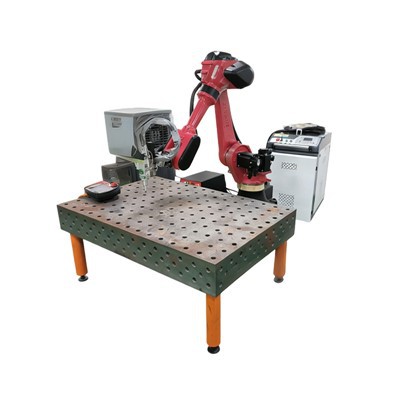
Before delving into the learning capabilities of injection molding robot arms, it’s essential to understand their fundamental functions. These robot arms are designed to automate various aspects of the injection molding process, such as part removal, placement, and quality inspection. They are equipped with precision sensors, actuators, and control systems that allow them to perform repetitive tasks with high accuracy and speed.
The traditional operation of an injection molding robot arm is based on pre – programmed instructions. These programs define the arm’s movement path, speed, and force for each task. For example, when a molded part is ready, the robot arm is programmed to move to a specific position, grasp the part, and transfer it to a designated location. This pre – programmed approach has been highly effective in ensuring consistent production quality and efficiency.
The Concept of Learning in Robot Arms
The idea of a robot arm learning new tasks is not a new concept. In recent years, the field of robotics has seen significant advancements in artificial intelligence (AI) and machine learning (ML). These technologies have the potential to revolutionize the way robot arms operate.
Machine learning algorithms enable robots to analyze data from their sensors, such as vision systems, force sensors, and proximity sensors. By processing this data, the robot can adapt its behavior based on the real – time conditions of the injection molding process. For example, if the robot detects a defect in a molded part, it can adjust its handling process to prevent further issues.
There are two main types of learning in robot arms: supervised learning and unsupervised learning. In supervised learning, the robot is trained using a set of labeled data. For instance, an operator can provide the robot with a series of examples of good and bad parts, and the robot learns to distinguish between them. Unsupervised learning, on the other hand, allows the robot to find patterns in the data without explicit labels. This can be useful for detecting anomalies in the injection molding process.
Can an Injection Molding Robot Arm Learn New Tasks?
The answer is a resounding yes. Modern injection molding robot arms are increasingly being equipped with AI and ML capabilities, enabling them to learn new tasks.
One of the key advantages of a learning robot arm is its ability to adapt to changes in the production environment. For example, if a new mold is introduced, the robot can quickly learn the new part’s geometry and handling requirements. This reduces the setup time and allows for faster product changeovers.
Another area where learning is beneficial is in quality control. A robot arm with learning capabilities can continuously monitor the quality of the molded parts. It can learn to identify subtle defects that may not be easily detectable by human operators. By analyzing the data from multiple sensors, the robot can make real – time decisions on whether a part meets the quality standards.
However, implementing learning capabilities in injection molding robot arms is not without challenges. One of the main challenges is the complexity of the injection molding process itself. The process involves multiple variables, such as temperature, pressure, and material properties. These variables can affect the quality of the molded parts and make it difficult for the robot to learn accurately.
Another challenge is the need for large amounts of data. Machine learning algorithms require a significant amount of data to train effectively. Collecting and labeling this data can be time – consuming and costly. Additionally, ensuring the security and privacy of the data is crucial, especially in a manufacturing environment where sensitive information may be involved.
Real – World Applications of Learning Robot Arms in Injection Molding
Despite the challenges, there are several real – world applications of learning robot arms in injection molding.
In the automotive industry, injection molding is used to produce a wide range of parts, such as dashboard components, door panels, and engine covers. A learning robot arm can be used to handle these parts more efficiently. For example, it can learn to adjust its grip force based on the part’s size and shape, reducing the risk of damage during handling.
In the consumer electronics industry, injection molding is used to produce casings for smartphones, tablets, and other devices. A learning robot arm can be trained to perform quality inspections on these parts. It can learn to detect surface defects, such as scratches and dents, and reject parts that do not meet the quality standards.
In the medical device industry, injection molding is used to produce components such as syringes, catheters, and surgical instruments. A learning robot arm can be used to ensure the precise handling and assembly of these critical parts. It can learn to perform tasks such as inserting needles into syringes or assembling complex surgical instruments with high accuracy.
Future Trends in Injection Molding Robot Arms
The future of injection molding robot arms looks promising. As AI and ML technologies continue to evolve, we can expect to see even more advanced learning capabilities in these robot arms.
One trend is the development of collaborative robot arms, also known as cobots. These cobots can work alongside human operators, sharing the same workspace. A learning cobot can learn from the human operator’s actions and adapt its behavior accordingly. This can improve the efficiency and safety of the injection molding process.
Another trend is the integration of cloud computing and the Internet of Things (IoT) in injection molding robot arms. By connecting the robot arms to the cloud, they can access a vast amount of data and analytics. This can enable the robot to learn from a global database of injection molding processes and improve its performance over time.
Conclusion
In conclusion, an injection molding robot arm can indeed learn new tasks. With the advancements in AI and ML technologies, these robot arms are becoming more intelligent and adaptable. They can improve the efficiency, quality, and flexibility of the injection molding process.
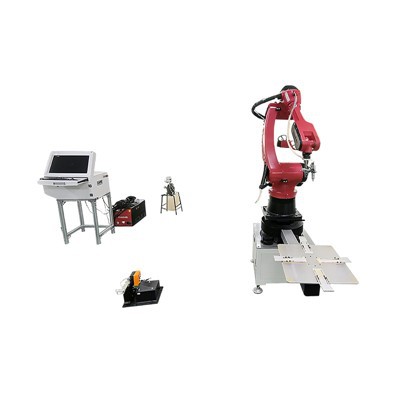
As a supplier of injection molding robot arms, I am committed to providing our customers with the latest technologies and solutions. Our robot arms are designed to be easily programmable and can be equipped with learning capabilities to meet the specific needs of each customer.
Delta Robot If you are in the market for an injection molding robot arm and are interested in exploring the benefits of learning capabilities, I encourage you to reach out to us. We would be more than happy to discuss your requirements and provide you with a customized solution. Let’s work together to take your injection molding process to the next level.
References
- Arkin, R. C. (2009). Behavior – Based Robotics. MIT Press.
- Murphy, K. P. (2012). Machine Learning: A Probabilistic Perspective. MIT Press.
- Siciliano, B., & Khatib, O. (Eds.). (2016). Springer Handbook of Robotics. Springer.
Dongguan Chuanglida Intelligent Equipments Co., Ltd.
As one of the most professional injection molding robot arm manufacturers and suppliers in China, we also support customized service. Please feel free to buy discount injection molding robot arm in stock here from our factory. For price consultation, contact us.
Address: Room 201, Building 2, No. 61, Shachang 1st Road, Dalang Town, Dongguan City, Guangdong Province
E-mail: haoguangli001@outlook.com
WebSite: https://www.boruntestech.com/
