When I first started out in the open cooling tower business 12 years ago, I spent countless late nights troubleshooting a unit at a small food processing plant in the Midwest. The plant’s entire operation ground to a halt because their old closed system couldn’t keep up with the heat load from their pasteurization lines. Once we installed our open cooling tower, the difference was immediate—their process temperatures stabilized, energy costs dropped by nearly 18%, and they’ve been a steady customer ever since. That experience stuck with me because it drove home a truth I still carry into every client conversation: open cooling towers aren’t just pieces of industrial equipment. They’re quiet, reliable workhorses that power some of the most critical sectors of modern society, and I’ve spent my career making sure every one we send out is built to handle whatever a job throws at it. Open Cooling Tower

A lot of people new to industrial cooling get confused between open and closed systems, and honestly, I get it—both have their place. But open cooling towers are the unsung heroes because they rely on a simple, highly effective principle: they pull in ambient air, spray it over a fill media that maximizes water surface area, and use evaporation to dissipate heat. The tradeoff is that the process water is open to the atmosphere, which means it needs regular treatment to prevent scale, corrosion, and biological growth. But for applications where you’re moving massive amounts of heat without the space or cost premium of closed loops, open cooling towers are unbeatable. Let me walk you through the core applications we see every day, because each one is a story of how our towers keep businesses running.
First up, and still the largest segment of our business, is power generation. Whether it’s a coal-fired plant, a natural gas turbine facility, or even a biomass power station, these plants turn fuel into electricity by spinning turbines, and those turbines run hot. The main job of a cooling tower here is to pull the excess heat out of the circulating water that cools the turbine generators and condenser systems. What I love about working with power plants is that they need cooling solutions that can run 24/7, 365 days a year—no downtime, no exceptions. A few years back, we worked with a 600-megawatt natural gas plant in the Southwest that was dealing with extreme seasonal heat that made their original tower underperform. We sized a custom open tower system to match their full heat load, adjusted the fill media to handle dry, low-humidity conditions, and added a smart water treatment integration that cuts their make-up water usage by 22%. That plant now meets peak summer demand without missing a beat, and it’s become a go-to reference for other utility operators.
Next, the industrial manufacturing sector, which is broad and varied enough that we design almost a dozen different open tower configurations for different sub-sectors. Let’s start with chemical manufacturing, where process temperatures can get so high that even a small fluctuation can ruin batches of specialty chemicals or pharmaceuticals. Our open cooling towers are used to cool reactor jackets, distillation columns, and compression systems for everything from fertilizers to synthetic fibers. A client in the plastics industry came to us two years ago because their extrusion lines were overheating during production runs, leading to 12-hour delays and thousands in lost product. We installed two medium-capacity open towers that are integrated with their process control system, so if heat spikes, the tower automatically ramps up airflow and adjusts water flow. They’ve since cut their production downtime by 90%, and the line runs faster and more consistently than ever. Food and beverage manufacturing is another big one—we’ve worked with breweries, dairies, and canning facilities that need cooling that meets FDA standards. Unlike some systems that use harsh chemicals that could contaminate food products, our towers use a balanced water treatment program that keeps bacteria like Legionella under control without posing a risk, while still delivering the precise cooling needed for pasteurization, fermentation, and bottle washing.
Then there’s HVAC for large commercial and institutional buildings, which is often overlooked but makes up a huge portion of open tower demand. If you’ve ever walked into a sprawling shopping mall, a university campus with multiple buildings, a hospital, or a downtown office tower that stays comfortable even on a 95-degree summer day, chances are an open cooling tower is part of that system. These buildings have central chilled water systems that cool air that’s then distributed through ducts, and the tower’s job is to reject the heat absorbed by that chilled water. Hospitals, in particular, have unique needs—they need their cooling systems to be reliable because any outage could impact patient care, and they’re also required to maintain strict indoor air quality standards. We recently equipped a new 12-story hospital in the Southeast with a pair of open cooling towers that are designed for low noise emissions (critical because they’re installed on the roof adjacent to patient rooms) and have remote monitoring capabilities so the facility’s engineering team can check performance from their phones 24/7. The system has been running smoothly for over a year, and the hospital’s maintenance team loves that they get real-time alerts if there’s a small issue before it becomes a big problem.
I can’t talk about open cooling tower applications without mentioning data centers, a sector that’s exploded in the last decade and relies entirely on consistent, high-capacity cooling. Data centers generate massive amounts of heat from thousands of servers running 24/7, and even a 1-degree temperature increase can reduce server lifespan or cause costly downtime. Open cooling towers are ideal here because they can move huge volumes of air and water at a lower operating cost than many alternative systems. We’ve partnered with several mid-sized data centers across the country, helping them upgrade from outdated cooling systems that were driving up energy bills. One of our projects with a regional cloud services provider involved replacing three old cooling units with a single high-efficiency open tower that uses variable-speed fans to adjust to the facility’s actual heat load, rather than running at full capacity all the time. They saw a 30% drop in their cooling-related energy costs within six months, and their servers now run at a consistent temperature year-round, even during peak demand periods when the data center is handling 20% more traffic than usual.
Another application that’s close to my heart is HVAC for industrial process cooling in mining and metal processing. Operations like smelting, ore refining, and metal forging generate extreme heat, and they need cooling systems that can withstand dusty, dirty environments that would cause standard equipment to fail. Open cooling towers are built to handle these harsh conditions because we use durable materials like galvanized steel or fiberglass-reinforced plastic for the structure, and the fill media is designed to resist fouling from dust and mineral deposits. A gold mining operation in Nevada came to us a few years ago because their original cooling towers were constantly getting clogged with silica dust from the ore processing, leading to overheating and frequent shutdowns. We modified our standard open tower design with a pre-filter system that catches large dust particles before they reach the fill, and added a regular purge cycle that flushes out fine particles. Since the upgrade, their cooling system uptime has gone from 82% to 98%, which directly translates to more ore processed and higher profits for the mine.
Now, I want to be honest—open cooling towers aren’t the right fit for every job. If you need a closed loop to prevent process water contamination, or if your site has extremely limited water access, a closed system or air-cooled chiller might be a better choice. But for 70% of the industrial and commercial applications we quote on, open towers are the most cost-effective, efficient, and reliable solution. That’s why we spend so much time with clients upfront, not just selling them a tower, but sitting down to walk through their specific heat load, water availability, site space, and maintenance capabilities. I’ve turned away more than a few potential sales by telling a client that an open tower would be overkill for their needs, because building a relationship based on trust is more important to me than making a quick buck.
Over the years, I’ve seen how the right cooling system doesn’t just keep equipment running—it supports jobs, grows businesses, and even keeps communities safe. When a hospital’s cooling works, nurses and doctors can focus on patient care, not overheating equipment. When a data center’s cooling is reliable, small businesses can run their online stores and keep their operations going. When a manufacturing plant’s cooling keeps production on track, factory workers can show up to a steady job and provide for their families. That’s why every open cooling tower we build is engineered and assembled with that bigger picture in mind.
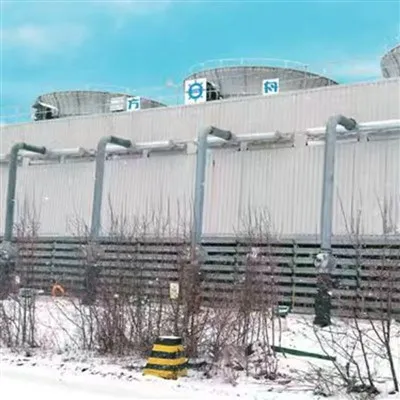
If you’re in a position where your cooling system is costing too much, breaking down too often, or not meeting the demands of your operation, I’d love to hear from you. We work with all types of clients, from small local breweries to large power plants, and we tailor every solution to their specific needs. Whether you need a replacement tower, a system upgrade, or a new installation, our team has the experience to get it done right, on time, and within budget.
Open Cooling Tower References
ASHRAE Handbook: HVAC Systems and Equipment, American Society of Heating, Refrigerating and Air-Conditioning Engineers, 2020.
Cooling Technology Institute (CTI) Standards for Open Cooling Tower Performance, 2021.
National Fire Protection Association (NFPA): Legionellosis Prevention and Control in Water Systems, 2022.
U.S. Department of Energy: Industrial Cooling System Best Practices, 2023.
Hainan Haizhou Fluid Technology Co., Ltd.
As one of the most experienced open cooling tower manufacturers and suppliers in China, we also support customized service. Please feel free to wholesale bulk high quality open cooling tower in stock here from our factory. Contact us for more details.
Address: Room 3003A-877, 30th Floor, Tower A, Internet Finance Building, No. 3 Guoxing Avenue, Lantian Subdistrict, Meilan District, Haikou City, Hainan Province
E-mail: FD@jxark.com
WebSite: https://www.hnhzark.com/
