If you’ve ever waited around for an electric two-wheeler or small delivery EV to charge—baking in the sun, killing time scrolling because the charger’s taken or broken—you already know why smart battery swapping cabinets are such a big deal. For someone like me, running a small supplier that builds these things, the quality control (QC) process isn’t just a step we check off for compliance. It’s the entire backbone of why customers come back to us instead of ordering random cabinets from Alibaba and crossing their fingers. Most people see a slick, weatherproof metal box with a dozen battery slots, a screen, and a little app, but there’s a ton of work that goes into making sure every single part works exactly how it’s supposed to, every time. Let me walk you through our QC process, the messy parts no one talks about, and how we avoid the garbage that makes some swapping cabinets a headache. Smart Battery Swapping Cabinet

First, let’s get one thing straight: this isn’t a one-and-done check before we ship a cabinet. We split QC into three big phases—pre-production, in-production, and final pre-shipment—and we also have a little post-launch check for every batch that gets deployed to a customer’s site. No cutting corners here, because if a battery slot won’t lock tight, or the cabinet’s Wi-Fi dies mid-swap, that’s a customer delivery driver stuck with a dead van, and that’s on us.
We start with pre-production QC before we even touch a single sheet of metal for a cabinet. This is where we vet every single part that goes into our cabinets, because if a sensor is garbage, no amount of on-the-spot fixing will save it. Let’s break that down: we source everything from microchips that run the locking mechanism, to RFID scanners that match a rider’s app to their battery, to the heavy-duty lithium-ion battery cells that live inside the slots. For example, a while back we tested two different brands of temperature sensors that cost almost the same. One would work fine in a lab setting, but when we left it in a hot shipping crate for a week, it read 10 degrees lower than actual, which would be a huge safety hazard for the batteries. We dumped that entire brand, even though their sales rep begged us to keep their parts. Same with the battery cells: we only go with cells that are certified for the specific use case—we don’t use generic phone cells, because those aren’t built to cycle 100+ times a month or sit in a cabinet in -10 degree weather in the Himalayas or 120-degree desert in the Middle East. We also test every lock cylinder and motor that opens and closes the slots; we’ve even done 10,000 open/close cycles in a row just to make sure the plastic gears don’t strip, because stripping gears mid-swap is an absolute nightmare for riders.
Next up is in-production QC, which means we stop every 10 cabinets off the assembly line to test, not just the first and last one. This is where we catch mistakes before they get buried in a pile of parts. For example, when we wire the electrical system, sometimes a technician might mix up the positive and negative wires for a sensor—on a single cabinet, that might not be a big deal to fix, but if we ship 50 of those, that’s 50 units we have to send back. Every hour, our line leads pull a unit from the line and run a full system diagnostic: we plug in a dummy battery to every slot, check if the locking motor engages within 2 seconds, if the battery’s temperature sensor reads correctly, if the RFID scanner picks up a test card in under a second, and if the cabinet’s Wi-Fi and 4G modules connect to our cloud server without dropping. We also do a water test here—we hose the cabinet down with 5 gallons of water to simulate heavy rain, and check if any wires or electronics get wet. Last quarter, we caught a batch of cabinets that had a tiny gap in the door seal that would’ve let water seep in after 6 months of monsoon rains—we stopped production immediately, fixed the seal design, and avoided a ton of field calls. We also test the safety features here: every cabinet has an overcurrent shutoff that cuts power to a battery if it detects a short, so we manually short a few slots to make sure that shutoff triggers instantly. No exceptions here, because fire risks are non-negotiable.
Then we get to the final pre-shipment QC, which is the last check before a cabinet leaves our warehouse. This is a full, end-to-end test that runs for 48 hours straight on every single unit. We don’t skip this, even if the customer is in a hurry. During this 48-hour test, we keep the cabinet in a temperature-controlled chamber that simulates every condition our customers face: hot, cold, humid, even dusty for sites in areas with bad air quality. We swap dummy batteries in and out of every slot 50 times, simulate app logins and swaps, and monitor every system log—no dropped connections, no failed swaps, no overheating. We also run a battery capacity test for every slot: we put a charged dummy battery in each slot, monitor it for 24 hours, and make sure it retains at least 95% of its charge, because if a rider takes a “full” battery that’s actually only charged to 70%, that’s a bad experience. Last year, a customer asked us to expedite a 20-cabinet order for a big delivery fleet launch, and we did this 48-hour test on all of them anyway, even though it pushed the delivery back 2 days. That customer is now our biggest repeat client, and they told us later they almost went with another supplier that would’ve skipped the full test to hit the deadline.
Wait, and I can’t skip the field validation part—this is the part that makes our QC real, not just a lab exercise. When we ship a batch of cabinets, we send a small team to deploy the first 2 units to a test site for 2 weeks before the full batch goes live. We don’t just set them up and leave; we watch every swap, check the logs, talk to the drivers using them, and fix any small kinks that don’t show up in a lab. For example, last year we deployed two cabinets in a busy area in India, and noticed that when drivers opened the slots quickly, the locking mechanism would sometimes not reset properly for the next use. That’s something we never would’ve caught in a lab, because no one swaps a battery in 3 seconds like they do when they’re late for a delivery. We tweaked the software timing on the locking motor, and that issue never came up again. We also do monthly checks on all deployed cabinets for the first 3 months, just to make sure nothing is falling apart or malfunctioning in the field.
Now, let’s talk about the stuff we don’t advertise, because that’s where QC really lives: our non-conformity process. If a part fails a test, or a cabinet falls short during QC, we don’t just fix it and send it out—we log everything, figure out why it happened, and fix the root cause. For example, a few months back, we had 3 cabinets fail the water test because the gaskets we used were the wrong thickness. We didn’t just replace the gaskets on those 3 units; we went back to our gasket supplier, tested 5 new gasket styles, and updated our specs so that never happens again. We also track every failed part, every failed cabinet, and every field issue, so we can spot trends—like if a certain sensor brand is failing more in cold weather, we can switch suppliers before that becomes a big problem. A lot of suppliers skip this part, but it’s the only way to get better, not just do the same bad thing over and over.
I know some people think that a swap cabinet is just a box, but when your business is built on a rider being able to swap a battery in 10 seconds and get back on the road, every part has to work. If you’re a delivery fleet manager looking to cut down on charging time, or a city looking to roll out e-mobility without the headache of bad infrastructure, the last thing you want is a cabinet that doesn’t work when you need it. Our QC process is why we can say we stand behind every cabinet we build, and why most of our new business comes from referrals from existing customers.
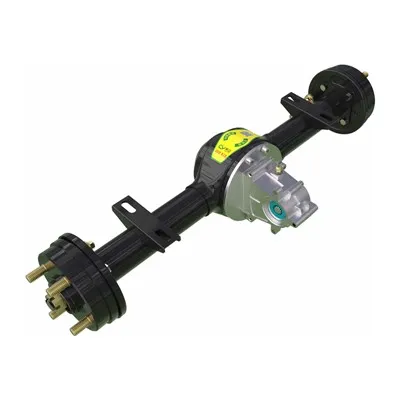
Integrated Rear Axle with Two Gears If you’re looking for a reliable smart battery swapping cabinet supplier, and want to talk through your specific needs—whether that’s for urban delivery fleets, rural areas with extreme weather, or a big city-wide e-mobility project—hit us up to connect for a chat. We’re here to make this stuff work, not just sell boxes.
References
- International Electrotechnical Commission. (2021). Safety Requirements for Electric Vehicle Battery Swapping Systems.
- National Fire Protection Association. (2022). Standard for Battery Energy Storage Systems.
- IEEE Standards Association. (2020). Smart Grid Standards for Electric Vehicle Charging and Swapping Infrastructure.
- World Bank Group. (2023). Quality Assurance Frameworks for Electric Mobility Infrastructure in Emerging Markets.
- European Committee for Standardization. (2022). EN 62660: Secondary Lithium-Ion Cells for Traction Use – Safety Requirements.
Jiangsu Changyun Drive Techniques Co., Ltd.
As one of the leading smart battery swapping cabinet manufacturers and suppliers in China, we offer a wide range of products with superior quality. Please rest assured to wholesale advanced smart battery swapping cabinet from our factory. If you have any enquiry about cooperation, please feel free to email us.
Address: Building B, 1st Floor, Chuangyan Port, Science and Education City, Wujin District, Changzhou City, Jiangsu Province
E-mail: eva@czbenma.com
WebSite: https://www.cyevenergy.com/
