Hey everyone, PVC Vacuum Hose

If you’ve ever shopped around for vacuum hoses—whether you’re a mechanic, a workshop owner, or just someone tinkering on weekend car projects—you’ve definitely seen PVC vacuum hoses pop up a lot. They’re cheap, flexible, easy to work with, and they get the job done for most low-pressure vacuum applications. But I’ve lost count of how many times I’ve gotten this question: “Are PVC vacuum hoses fire-resistant?” It’s such a common one, and honestly, it’s not a yes or no answer—so let’s break this down like we’re chatting over a coffee, no stuffy lab jargon required.
First, let’s get one thing straight: I’m a PVC vacuum hose supplier, not a chemist, but I’ve been dealing with these hoses every single day for the last 8 years. That means I’ve tested different materials, heard customer horror stories, and learned the hard way what works and what doesn’t when temperatures get high. PVC itself is polyvinyl chloride, right? It’s a plastic that’s super durable for regular use, but it has a lot of variables depending on how it’s made. Not all PVC is the same, and that’s where the fire-resistant question gets messy.
Let’s start with the basics of how fire-resistant materials work. For something to be truly fire-resistant, it doesn’t just mean it doesn’t burn easily—it means it can resist ignition, slow down flame spread, and self-extinguish once the heat source is gone. Some materials are naturally more flame-retardant because of their chemical structure, but most plastics need additives to make that happen. Now, regular “general-purpose” PVC vacuum hoses—you know, the ones that cost $5 a roll and you pick up at the auto parts store down the street—they’re not formulated with flame retardants at all. These are made for normal vacuum line use in cars, appliances, or small machinery where temperatures stay pretty low. Most of the time, those lines see temps between -40°F and 170°F, which is way below the threshold where PVC starts to break down. But if you put that regular PVC near a hot engine part, a spark, or even a hot exhaust manifold, it’s a different story.
I’ve seen this firsthand. A client came to me a couple years back, panicking because their old general PVC vacuum hose had melted and caught a small fire under a customer’s car. It was a 10-year-old mechanic in Ohio, and he said he’d “just grabbed whatever was on the shelf” to replace a broken line on a pickup truck. The line ran right next to the exhaust manifold, which runs way hotter than 170°F—more like 500°F or even higher on a cold start. Within minutes, that regular PVC started to soften, drip, and ignite. That’s not a rare incident, either. I’ve had at least three or four clients a year come to me after that kind of mistake, asking for hoses that can handle heat without going up in smoke.
Now, here’s the good stuff: not all PVC vacuum hoses are created equal. Some of the higher-spec, flame-retardant PVC hoses we supply are actually formulated to be fire-resistant (or at least flame-retardant, which is the term the industry uses). Wait, there’s a tiny difference between fire-resistant and flame-retardant—flame-retardant means they resist burning once ignited, while truly fire-resistant materials won’t ignite at all under normal conditions. Most of the time, for vacuum hose applications, flame-retardant is what people actually need, and that’s the stuff we specialize in.
How do we make that? We add specific chemical additives to the PVC compound during manufacturing—things like antimony trioxide, brominated compounds, or phosphorus-based retardants. These additives work by interfering with the combustion process: they stop the release of flammable gases when the PVC is heated, or they create a protective layer on the surface of the hose that keeps oxygen from getting to the material. We also adjust the plasticizer levels—plasticizers make PVC flexible, but too many can make it more flammable, so we balance that to keep it bendy without sacrificing fire resistance.
Let’s talk about temperature limits, because that’s a big part of this. Regular general PVC hoses top out around 170°F, as I said before. Our flame-retardant PVC vacuum hoses? They go up to 250°F, some even 300°F, depending on the grade. And when they are exposed to heat, they melt slower, drip less, and self-extinguish once the heat source is removed. That’s a huge difference from the regular stuff, which will keep burning if there’s anything nearby to feed it.
But here’s the catch, and I need to be honest with you: even our flame-retardant PVC hoses aren’t fireproof. If you hold a blowtorch to them for 10 minutes, anything will burn, right? The key is that they resist ignition and slow flame spread under normal operating conditions, or even occasional short exposure to higher heat. For example, if a hose brushes against a hot engine manifold for a few seconds, our hoses won’t ignite. If a spark lands on them, they’ll stop burning on their own within a second or two. That’s the level of protection most people need, and it’s leaps and bounds better than regular PVC.
I also need to mention what applications actually require fire-resistant PVC vacuum hoses. If you’re using vacuum hoses in a regular HVAC system, or to hook up a kitchen vacuum sealer, or even for a small workshop air tool—you probably don’t need flame-retardant. Those applications have low heat, no sparks, and limited risk of fire. But if you’re working on automotive engines, heavy-duty machinery, farm equipment, industrial vacuum systems, or anything where hoses might be near hot parts, sparks, or high heat—you absolutely need flame-retardant PVC hoses. That’s where the risk is, and that’s where the regular stuff will fail.
Wait, let’s clear up a common myth I hear all the time: “PVC is toxic when it burns.” That’s actually true, but it’s not unique to PVC. Most plastics, when they burn, release toxic fumes. Even rubber, silicone, nylon—all of them will release harmful gases if they’re heated to high enough temps. Flame-retardant PVC does have lower levels of toxic gas release when it burns, because it doesn’t burn as easily and for as long. That’s another win for applications where people might be working around the hose if something does go wrong.
I’ve had customers ask me, “Why not just use silicone hoses if you need fire resistance?” Silicone is more heat-resistant, right? Sure, but it’s way more expensive, less flexible, and not always necessary. For a lot of applications, PVC is the perfect balance of cost, flexibility, and durability—you just need to get the right PVC grade. Silicone is great for high-heat racing engines, but if you just need a hose for a tractor’s vacuum line that runs near the engine, our flame-retardant PVC will do the job for a fraction of the cost.
Let me give you a real example of how this works in the real world. A construction company I supply works on commercial HVAC systems. They were having constant issues with regular PVC hoses melting near the furnace vents, which caused vacuum leaks and ruined their ventilation systems. They switched to our flame-retardant PVC hoses two years ago, and since then, they’ve had zero issues with melting or fire-related problems. They told me it’s saved them thousands of dollars in callbacks and repairs, not to mention avoiding any safety issues for their technicians working on-site.
Another thing people don’t talk about: the certification for fire-resistant hoses. A lot of brands will slap “flame-retardant” on their hoses just to sell more, but they haven’t actually tested them. The hoses we supply meet standard certifications like UL 94 V-2, which means they self-extinguish within 30 seconds after being exposed to a small flame, and don’t drip burning material. Some of our higher-grade ones even meet UL 94 V-0, which is the strictest rating for plastics—they self-extinguish within 10 seconds and don’t drip at all. That’s not just marketing talk; we third-party test every batch to make sure it meets those standards.
So, to circle back to the original question: “Are PVC vacuum hoses fire-resistant?” The answer is: only if they’re formulated to be. Regular general-purpose PVC hoses are not fire-resistant at all—they’ll ignite, melt, and burn easily if exposed to heat or flames. But specialized flame-retardant PVC vacuum hoses are a great, cost-effective option that resists ignition, slows flame spread, and self-extinguishes, making them perfect for applications where fire is a risk.
I get it, it’s easy to just grab the cheapest hose you can find when you’re in a pinch, but cutting corners on this can lead to big problems—safety issues, downtime, even fires. That’s why my team and I are so careful about what we supply. We don’t sell the cheap, untested stuff that’ll melt under the hood of a truck. We only sell PVC vacuum hoses that we’d use in our own workshops, that meet strict fire safety standards, and that last.
If you’re not sure whether you need fire-resistant PVC vacuum hoses, think about where you’re using them. Are they near hot parts, sparks, or high temperatures? If yes, go for the flame-retardant grade. If you’re just using them in a low-heat, low-risk application, the regular stuff will work fine. But if you have any doubts, don’t hesitate to reach out. I’m here to help—whether you’re a small mechanic with a one-car garage or a big industrial company with 100+ pieces of machinery, we can help you find the right hose for your needs. No pressure, no sales pitch—just honest advice from someone who’s been in this game for years.
At the end of the day, PVC vacuum hoses are one of the most versatile, affordable parts out there, but their fire resistance depends entirely on how they’re made. Don’t fall for the “all PVC is the same” line—do your research, ask about certifications, and if you’re working in a high-heat environment, invest in the right hose. It’ll save you a ton of hassle (and maybe a fire) down the line.
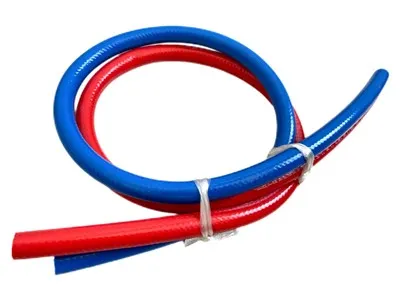
If you’re looking for reliable, tested PVC vacuum hoses that meet fire safety standards, or you have questions about which grade is right for your application, feel free to reach out and we can chat through your needs. No automated messages, no runaround—just a real person helping you find the right solution.
Flat Hose References
ASTM D635 – Standard Test Method for Rate of Burning and/or Extent and Time of Burning of Plastics in a Horizontal Position
UL 94 – Standard for Tests for Flammability of Plastic Materials for Parts in Devices and Appliances
PVC Materials: Properties, Additives, and Applications, Industrial Plastics Manufacturing Association, 2021
Automotive Vacuum System Safety Guidelines, National Institute for Automotive Service Excellence, 2022
Weifang Xinzhiyuan Plastic Co., Ltd.
As one of the most experienced pvc vacuum hose manufacturers and suppliers in China, we offer a wide range of products with superior quality. Please feel free to wholesale premium pvc vacuum hose made in China here from our factory. We also accept customized orders.
Address: No. 700, Tongle Street, Economic Development Zone, Changle County, Weifang City, Shandong Province
E-mail: hua@xzypvchose.com
WebSite: https://www.pvchose-xzy.com/
