When it comes to manual arbor presses, one of the most frequently asked questions from our customers is, "How much space does a manual arbor press need?" As a reliable supplier of manual arbor presses, I understand that having a clear understanding of the space requirements is crucial for our customers. This knowledge can help them plan their workspace effectively, ensuring both safety and efficiency. Manual Arbor Press
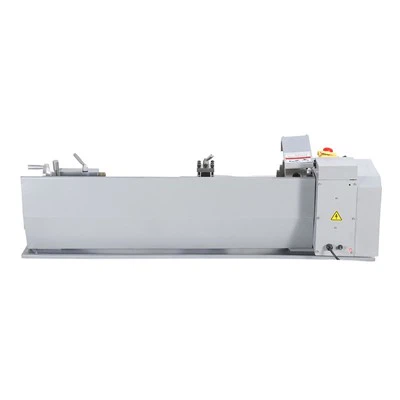
Understanding the Basics of Manual Arbor Presses
Before we delve into the space requirements, let’s briefly understand what a manual arbor press is. A manual arbor press is a mechanical device used for various pressing operations such as stamping, punching, bending, and riveting. It typically consists of a base, a column, a ram, and a handle. The force is applied manually through the handle, which drives the ram downwards to perform the pressing action.
Factors Affecting Space Requirements
Several factors influence how much space a manual arbor press needs. These factors include the size and model of the press, the type of work being done, and the need for additional equipment.
Size and Model of the Press
Manual arbor presses come in a variety of sizes and capacities. Smaller presses with lower tonnage capacities are generally more compact and require less space. For example, a bench – top manual arbor press with a 1 – ton capacity may have a base dimension of around 6 inches by 8 inches and a height of approximately 12 inches. This type of press can easily fit on a standard workbench, requiring a workspace that is just slightly larger than the base of the press itself.
On the other hand, larger manual arbor presses with higher tonnage capacities, such as 5 – ton or 10 – ton presses, are bulkier and demand more space. These presses often have larger bases and taller columns to accommodate the increased force and structural requirements. A 5 – ton manual arbor press may have a base dimension of around 12 inches by 18 inches and a height of 24 inches or more. The larger the press, the more floor space or bench space it will occupy.
Type of Work
The type of work being performed on the manual arbor press also impacts the space requirements. If you are performing simple operations like punching small holes in thin materials, you may only need enough space to place the workpiece on the press bed and operate the handle comfortably. However, if you are engaged in more complex operations such as bending large – sized metal sheets or stamping intricate designs, you will need additional space around the press.
For instance, when bending metal sheets, you need enough space to maneuver the sheet into position and ensure that it can be bent without hitting any obstacles. You may also need space to hold the necessary tools and fixtures for the operation. In some cases, you might need to leave space for the ejection of the finished part or scrap material.
Additional Equipment
In many workshop settings, manual arbor presses are used in conjunction with other equipment. This could include tool cabinets, vises, or material storage racks. If you plan to use these additional items near the press, you need to factor in their space requirements as well.
For example, if you want to keep a tool cabinet next to the press to store the punches, dies, and other tools, you need to leave enough space for the cabinet’s dimensions and the clearance required to open its doors. Similarly, if you use a vise to hold the workpiece more securely, you need to ensure that there is enough space to attach and operate the vise without interfering with the press’s movement.
Calculating the Space Requirements
To calculate the space requirements for a manual arbor press, you first need to determine the physical dimensions of the press itself. This includes the length, width, and height of the base, column, and ram. Measure the footprint of the press, which is the area of the base that will be in contact with the floor or workbench.
Next, consider the clearance space around the press. I recommend leaving at least 12 inches of clearance on all sides of the press. This clearance allows for easy access to the press for maintenance, cleaning, and operation. It also provides a safety margin in case of any accidental movement or flying debris during the pressing operation.
If you are considering the need for additional equipment, measure the dimensions of each item and add them to the total space calculation. Make sure to leave enough space between the press and the additional equipment for easy movement and operation.
For example, if you have a manual arbor press with a base dimension of 10 inches by 12 inches and you want to keep a tool cabinet that is 18 inches wide and 24 inches deep next to it, you would need a total workspace that is at least (10 + 12 + 18 + 2 * 12) inches in width and (12+ 24+ 2 * 12) inches in depth, assuming you leave 12 – inch clearance on all sides.
Space Requirements for Different Work Environments
The space requirements for a manual arbor press can vary depending on the work environment.
Workshop Settings
In a traditional workshop, space might be relatively more abundant. However, it is still important to plan the layout carefully. You can place the press on a dedicated workbench or directly on the floor. If using a workbench, make sure it is sturdy enough to support the weight and force exerted by the press.
When arranging multiple presses in a workshop, you need to ensure that there is enough space between each press for operators to move around safely. I suggest leaving at least 3 feet of space between adjacent presses to facilitate easy access and prevent interference during operation.
Small Garages or Home Shops
In a small garage or home shop, space is often limited. In such cases, you may need to choose a smaller – sized manual arbor press. A bench – top model is usually a good choice as it can be placed on an existing workbench, saving floor space.
You also need to be more strategic about the placement of additional equipment. For example, you can use wall – mounted tool racks or vertical storage solutions to maximize the use of space. Make sure that there is still enough clearance around the press for safe operation.
Industrial Settings
In an industrial environment, where there are larger – scale operations and multiple workers, the space requirements are more complex. The manual arbor press needs to be integrated into the overall production line or workflow. There should be sufficient space for material handling, such as the loading and unloading of workpieces, as well as the movement of forklifts or other handling equipment.
Industrial presses also require more space for maintenance and repair. A maintenance aisle of at least 4 feet wide should be provided around the press to allow technicians to access all parts of the machine easily.
Importance of Adequate Space
Providing adequate space for a manual arbor press is not just about fitting the machine into the workspace. It is also about ensuring the safety and efficiency of the operators.
Safety
Adequate space around the press reduces the risk of accidents. When there is enough clearance, operators can move freely around the press, reducing the chances of bumping into the machine or other equipment. It also provides enough room for emergency evacuation in case of an unexpected event.
In addition, the proper clearance helps to prevent flying debris from hitting other objects or people in the vicinity. For example, during a punching operation, small metal chips may be ejected. If there is enough space around the press, these chips are less likely to cause harm.
Efficiency
Enough space allows for efficient operation of the press. Operators can easily access the controls, load and unload workpieces, and perform necessary adjustments. When the workspace is well – organized and not cramped, the operator can work more quickly and accurately, increasing overall productivity.
Conclusion
In conclusion, the space requirements for a manual arbor press depend on various factors, including the size and model of the press, the type of work being done, and the need for additional equipment. As a supplier, we understand that every customer’s situation is unique, and we are always here to help you determine the most suitable press for your space and operational needs.

If you are in the market for a manual arbor press, or if you have any questions about space requirements or other aspects of our products, we encourage you to contact us for a detailed discussion. Our team of experts can provide you with personalized advice and help you make an informed decision. We look forward to assisting you in finding the perfect manual arbor press for your workspace.
Milling and Drilling References
- Handbook of Press – Working Operations by George E. Dieter
- Machinery’s Handbook by Industrial Press Inc.
YS Machine Tools Co., Ltd.
We’re well-known as one of the leading manual arbor press suppliers in China, featured by quality products and good service. Please rest assured to buy customized manual arbor press at competitive price from our factory. Contact us for more details.
Address: 300 Sandusky st, Ohio, 43611, USA
E-mail: yishoumachinetools@gmail.com
WebSite: https://www.ysmachinetool.com/
