Hey there! If you’re deep in the market for an aluminum CNC machine—whether you’re a small fab shop scaling up, a hobbyist turning out custom parts, or a mid-sized manufacturer needing consistent, tight-tolerance cuts—you’ve probably asked one big question: “How much does this thing even cost?” As someone who’s been selling aluminum CNC machines for over a decade, I get it. Price tags on these bad boys don’t just pull a number out of thin air—they depend on a ton of factors that most first-time buyers don’t always see right away. Let’s break this down like we’re geeking out over the latest gear at a fab trade show, no stuffy jargon and no generic “it depends” fluff that leaves you more confused. Aluminum Cnc Machine
First off, let’s get one thing straight: aluminum CNC machines aren’t a one-size-fits-all toy. The price range is way wider than a lot of folks expect, and it all starts with what you actually need to do with it. I’ve seen machines go for under $10k for a tiny, tabletop unit and stretch all the way past $100k for a heavy-duty, production-grade workhorse. Let’s split that into real, actionable tiers because that’s what actually matters when you’re budgeting.
The lowest end—think sub $10k, more like $5k to $9.5k—are basically entry-level, hobbyist or small-batch tabletop machines. These are great if you’re a maker space cranking out prototype parts, a custom woodworker who dabbles in light aluminum signage, or a small startup just testing the waters before committing to big orders. Now, don’t get me wrong—these aren’t meant for 24/7 production. They’re compact, usually have a 2’x2’ or 3’x3’ work area, and run on a standard 110V outlet (no need for a dedicated 220V line that requires an electrician). But here’s the catch: they’re built for light work. You can mill thin aluminum sheets, engrave logos on aluminum hardware, or cut small brackets, but don’t try to punch out 100 thick aluminum engine blocks a day on one of these. Their spindle power is usually around 1.5kW to 2.2kW, so they’ll struggle with anything over 1/4-inch aluminum without causing chatter or burning the material. I sell a ton of these to local makers and small design shops, and most folks who buy them say they’re perfect for their occasional, low-volume needs—just don’t expect them to hold up to heavy daily use.
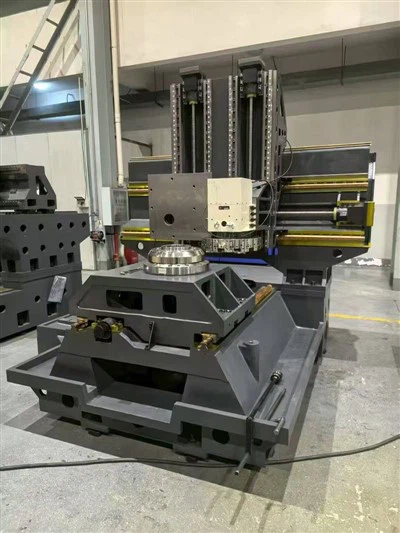
Next up is the mid-tier, which is where most professional buyers land: that $12k to $45k sweet spot. This is the bread and butter for small to mid-sized fab shops, aerospace component makers, automotive part designers, and even jewelry manufacturers who work with aluminum. These machines are usually floor-standing, so they take up a bit more space (think 4’x4’ to 8’x4’ work areas) and run on 220V for that extra power. Spindles here range from 3kW to 7.5kW, so you can mill 1/2-inch to 1-inch aluminum plates, cut custom brackets for bike frames, or crank out small batches of aluminum enclosures for electronics. What pushes the price up in this tier? Build quality, mostly. Entry-level machines have MDF or thin aluminum frames that vibrate when you cut heavy material, leading to wonky parts. Mid-tier units use cast iron or thick steel frames, which eliminate that vibration and make cuts way more precise—super important if you’re working on parts that need to fit together perfectly, like aerospace components or automotive engine parts. Also, you get better control systems here: many use Fanuc or Siemens-based controllers (not the cheap, clunky ones on entry-level models) and have linear rails instead of the cheaper ball screws that wear out fast. I’ve had customers upgrade from entry-level to mid-tier because they started getting inconsistent parts that required rework—now they save time and money on scrap, which makes the price difference totally worth it. Some mid-tier machines even have automatic tool changers (ATCs), which let you switch between end mills, drills, and engraving bits without stopping the machine. That’s a huge time-saver if you’re doing multi-step jobs, and it adds a chunk to the price—usually around $5k to $10k extra for an ATC.
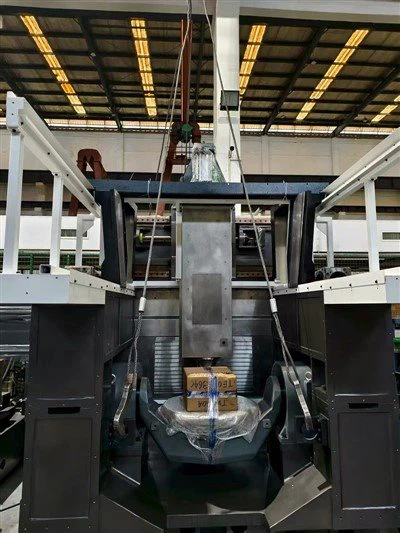
Then there’s the big boys: heavy-duty production aluminum CNC machines, which start at $50k and can go all the way to $150k or more. These are for large manufacturers running 24/7, like those making aircraft panels, agricultural equipment parts, or automotive mass-production components. They have massive work areas—we’re talking 10’x5’ or even bigger—so you can mill huge aluminum plates in one go without moving the material. Spindles here are 10kW and up, some even have high-speed machining spindles that spin at 20,000 RPM+, which lets you cut aluminum super fast without sacrificing precision. The frames here are reinforced cast iron or heavy-duty steel, built to withstand hours of continuous use without wearing out. You’ll also get advanced features like coolant systems that flood the cutting area to keep the spindle and bit from overheating (critical for long production runs), chip conveyors that automatically clear aluminum shavings so you don’t have to stop and clean mid-job, and multi-axis capabilities (4th or 5th axis) that let you cut complex, 3D aluminum parts that would be impossible with a standard 3-axis machine. I worked with a customer last year who makes custom truck frames—they bought a 5-axis production unit for $120k and told me it paid for itself in 18 months because they cut their production time per frame from 8 hours to 2. Their output went up, their defect rate dropped, and they stopped paying third parties to do their aluminum machining. For high-volume shops, that investment is a no-brainer, but you wouldn’t drop that kind of cash if you only need a few custom parts a month.
Wait, but hold up—there are other things that affect the price beyond the tier itself. I see buyers get tripped up on these all the time. First, spindle type: a standard belt-driven spindle is cheaper, but it’s less efficient and wears out faster than a direct-drive or high-speed spindle. The difference can add $2k to $5k. Then there’s precision tolerance—if you need +/- 0.001mm cuts for medical parts, you’ll pay more than for +/- 0.01mm cuts for decorative signage. Controller brand also plays a role: Fanuc and Siemens controllers are reliable but pricey, while some Chinese-made controllers are cheaper but might not have the same support. Oh, and after-sales service! If you buy a machine from a no-name seller in a foreign country, you might save $5k upfront, but if it breaks down, you’re stuck waiting weeks for a replacement part and no one to help you troubleshoot. When you buy from a trusted supplier like me, you get local support, same-day troubleshooting, and parts in 24 hours— that’s worth the extra cost if your machine is critical to your business.
Let’s also talk about hidden costs, because that’s where a lot of buyers get burned. For entry-level machines, you might need to buy a new spindle, bits, and a dedicated power supply on top of the machine price—those can add $1k to $2k. For mid and heavy-tier, you might need to install a bigger electrical panel, a dust collector for aluminum shavings, or a custom enclosure for the machine, which runs another $3k to $10k. Don’t forget training too—if your team has never used a CNC machine, you’ll need to spend a day or two on training, which is usually included in the price from a good supplier, but some cut corners on that.
Now, let’s get real: I’m not gonna tell you the most expensive machine is the best, or the cheapest is garbage. I’ve sold machines across every tier, and every customer who buys from me gets exactly what they need. I had a customer last month who runs a small custom sign business—they bought a $6k entry-level tabletop machine and it’s perfect for engraving aluminum name tags and cutting small sign pieces. Another customer, a small aerospace shop, bought a $32k mid-tier machine with an ATC and cast iron frame, and they haven’t had a single issue in 2 years. A third customer, a large agricultural equipment maker, bought a $110k production 5-axis machine to make large aluminum parts for tractors, and it’s been running 12 hours a day, 6 days a week for 3 years straight.
So, if you’re sitting here trying to figure out where you fit, ask yourself a few quick questions: What’s the size of the parts I’m making? How many parts am I going to run per day? Do I need to cut complex 3D shapes or just simple flat parts? How much precision do I need? Do I have space for a big floor unit, or is a compact tabletop better? If you answer those, you’ll already narrow your price range down by half.
At the end of the day, the price of an aluminum CNC machine isn’t just a number—it’s an investment in your business. Buy too cheap and you’ll deal with consistent breakdowns, bad parts, and lost revenue. Buy too expensive and you’ll be paying for features you’ll never use. That’s why I always take the time to chat with customers, ask about their specific needs, and recommend the machine that fits their budget and their workflow, not just the priciest one in my catalog. If you’re ready to stop guessing the price and start finding the right machine for your aluminum machining needs, hit me up to chat through your project details. No pressure, no salesy nonsense—just real talk about what works for you.
Vertical Lathe References:
- Modern Machine Shop. (2022). "CNC Machine Cost Factors: What Buyers Need to Know."
- SME (Society of Manufacturing Engineers). (2021). "Guide to Selecting Aluminum CNC Machines for Production."
- Haas Automation Inc. (2023). "CNC Machine Price Tiers for Small to Medium Businesses."
- Machining Design Magazine. (2022). "Hidden Costs of CNC Machine Ownership."
Smartech Machinery & Equipment Co., Ltd.
As one of the most professional aluminum cnc machinemachine manufacturers and suppliers in China, we also support customized service. Please rest assured to buy bulk aluminum cnc machinemachine made in China here from our factory. Contact us for more details.
Address: Room 2832, Changping Commercial Mansion, Shihua Road, Futian Free Trade Zone, Shenzhen, China
E-mail: smartech@smartechcnc.cn
WebSite: https://www.smartech-cnc.com/
